.png)
Why So Many New Permanent Makeup Artists Quit Within Their First Year

Let's start with something that most trainers won't tell you:
Permanent makeup is hard.
Not because the procedures are impossible to learn. Not because the industry is oversaturated. Not because there are too many artists.
Permanent makeup is hard because you're tattooing someone's face.
And that realization can be terrifying when you're first starting out.
Many people see beautiful before-and-after photos on social media and think:
I can do that.
What they don't see are the hundreds of practice hours, sleepless nights, self-doubt, and years it takes to build confidence behind the machine. People see the finished result. They rarely see what it took to get there.
The Fear Nobody Talks About
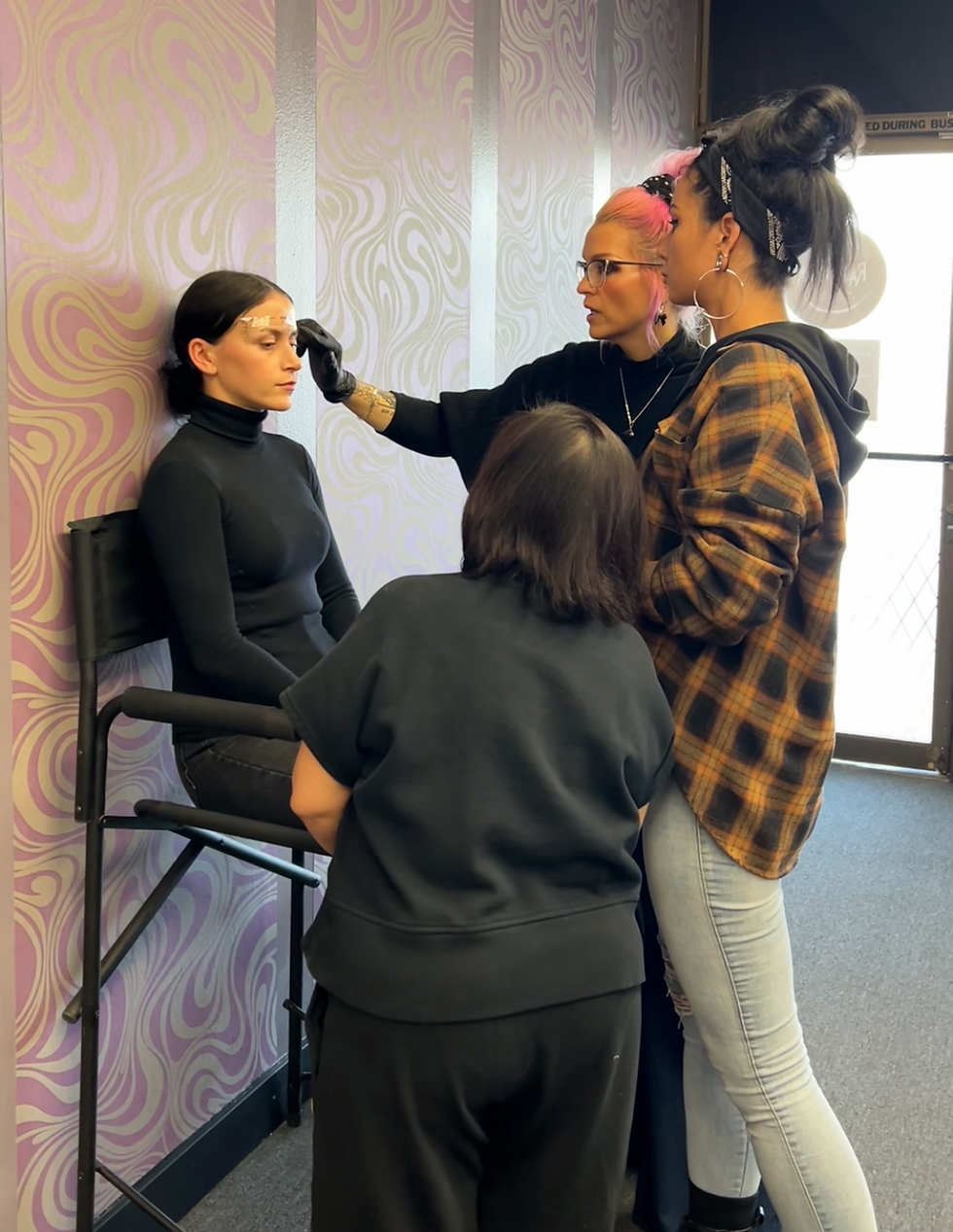
When I first started in permanent makeup, I was secretly hoping clients would cancel.
Not because I didn't want to succeed.
Not because I didn't care. Because I was scared.
I had invested a lot of money into my education and now I was expected to perform an entire procedure from start to finish.
Greeting The Client
Consultation
Mapping
Color Selection
Numbing
The Actual Tattoo Procedure
Aftercare Instructions
The entire process felt overwhelming.
The truth is that every profession comes with anxiety when you're new.
Doctors experience it. Lawyers experience it.
Even someone starting their first job at a restaurant experiences it.
The difference is that if you accidentally mess up someone's lunch order, it's usually a quick fix. When you're implanting pigment into someone's skin, the stakes feel much higher.
That pressure causes many new artists to question whether they made the right decision.
Your PMU Class Is Just The Beginning

One of the biggest misconceptions in our industry is that taking a permanent makeup class automatically creates a successful artist.
It doesn't.
A training program provides the fundamentals.
What happens after class is where your career is truly built. You must continue practicing. You must continue learning. You must continue pushing yourself outside of your comfort zone.
No instructor can do that part for you.
There is no boss checking whether you practiced today. There is no professor grading your homework. There is no one forcing you to spend your evening working on your portfolio instead of scrolling social media.
Success in permanent makeup requires personal accountability. And for many people, that transition is harder than expected.
Nobody Talks About The Business Side
Learning the procedure is only half the battle. Then comes the business side.
Marketing
Social Media
Photography
Video Creation
Client Communication
Scheduling
Reviews
Branding
Website Management
Lead Generation
As a permanent makeup artist, you are not simply learning a skill. You are building a business.

Being your own boss sounds exciting until you're the one responsible for getting clients through the door. Many new artists underestimate how much time is spent outside of actually performing procedures.
The First Year Is Usually The Hardest

I often tell students that their first year may be one of the toughest periods of their career.
Not because they're failing. Because they're building.
Building Skills
Building Confidence
Building a Portfolio
Building a Reputation
Building a Client Base
Many artists continue working full-time or part-time jobs while they build their permanent makeup business. That's normal.
In fact, I often encourage students to plan for that reality rather than expecting immediate financial success.
Can permanent makeup become a highly rewarding career?
Absolutely.
But it is not a get-rich-quick industry. The artists who succeed are usually the ones willing to put in the work long after class is over.
The Part Nobody Sees
What people see on social media is the finished product.
They see beautiful before-and-after photos.
They see packed schedules.
They see successful artists posting their work.
What they don't see are the difficult moments happening behind the scenes.
I cried a lot during my first year. I was extremely hard on myself. I overanalyzed my work. I questioned whether I was good enough. I had sleepless nights wondering if I made the right career choice.
Sometimes I would secretly hope a client would call and cancel because the thought of doing an entire procedure from start to finish felt overwhelming, and if you've ever felt that way, you're not alone.
The truth is that confidence doesn't magically appear after training. Confidence is built client by client. Procedure by procedure. Mistake by mistake.
You don't wake up one day feeling fearless.
You become confident because you continue moving forward despite being afraid.

Looking back now, I realize those uncomfortable moments were actually necessary. Every difficult client. Every nerve-racking procedure. Every moment of self-doubt was helping me build the confidence and experience I have today.
The artists who make it through those uncomfortable stages are often the ones who go on to build successful careers. Not because they're fearless. Because they refused to quit.
Why Some Students Succeed While Others Quit

After more than 10 years in the permanent makeup industry and training students of my own, I've noticed a pattern. The students who succeed are not always the most naturally talented. They're the ones who keep showing up.
They practice.
They ask questions. They seek mentorship. They stay coachable.
They keep moving forward even when they're nervous.
The students who quit often allow fear to make decisions for them. And that's understandable. Fear is part of growth. The goal isn't to eliminate fear. The goal is to move through it.
The Importance Of Mentorship And Support

At Radiant Ink in Torrance, California, one of the biggest lessons I've learned is that students need support after class, not just during class. That's why we created our Safety Net Program.
Our goal is to help bridge the gap between classroom training and real-world experience through ongoing guidance, business support, mentorship, and hands-on encouragement.
The Safety Net Program includes:
Lifetime Support
Business Coaching
Licensing Guidance
Marketing Assistance
Side-By-Side Support During Early Client Appointments
Two Months of Free Chair Rental for Qualifying Students
Because the truth is that most artists don't quit because they're incapable. They quit because they feel overwhelmed, isolated, and unsupported.
Final Thoughts
Permanent makeup can be one of the most rewarding careers in the beauty industry.
But it's important to enter the industry with realistic expectations.
It will take practice.
It will take patience.
It will take confidence-building.
It will take persistence.
The artists who succeed aren't necessarily the most gifted.
They're the ones who keep going when things get uncomfortable.
If you're considering permanent makeup training in Torrance, Los Angeles, or Southern California, understand that class is just the beginning. The real transformation happens afterward.
And that's where your commitment, mindset, and support system make all the difference.
Ready to learn more about PMU training at Radiant Ink?
Text us at 424-224-6477 to schedule a tour or learn more about our on-demand training programs.


Comments