.png)
What’s Actually Going Into Your Brows?
Why the pigment your permanent makeup artist uses matters more than you may think
When you're getting permanent makeup, most people think about the obvious things:
WHAT SHAPE WILL MY BROWS BE?
WHAT COLOR ARE WE CHOOSING?
WILL THEY LOOK NATURAL?
DOES IT HURT?
All completely fair questions.
But there’s another question I think clients should be asking a lot more often:
“What pigment are you putting into my skin?”
Because when it comes to permanent makeup, the color you see on appointment day is only part of the story.
What I care about just as much is how that pigment is going to behave and age in your skin over the next several years.
And most clients simply don't know to ask.
Permanent makeup has been around for decades, and those of us who have been doing it for years now have something incredibly valuable that we didn't have in the earlier days: Years and years of healed results to learn from. We've watched different pigment formulations age. We've seen colors fade beautifully, and we've also seen brows shift cooler, warmer, gray, blue, red or pink.
So let's look at what that can actually mean.
Why Do Some Older Brows Look Blue or Gray?

You've probably seen them. Brows that were originally brown but years later look charcoal, gray or slightly blue.
With some organic or carbon-containing pigment formulations, that cool appearance can become more noticeable over time, particularly when pigment has been implanted too deeply or the brows have become heavily saturated.
Think of it almost like looking at color through layers of tinted glass. What started as brown may visually appear much cooler once it's sitting beneath the skin.
This is why the pigment itself AND the way it's implanted matter.
Why Do Some Brows Fade
Red, Pink or Orange?
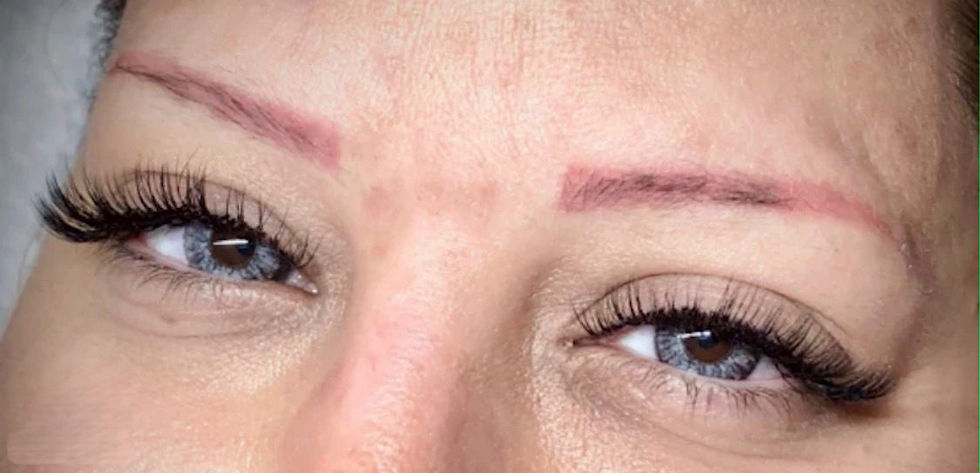
Then we have the opposite end of the spectrum.
Some mineral or inorganic pigment formulations can leave behind warmer red, orange or pink tones as the original brown gradually fades.
Brown isn't just one magical little color sitting inside a bottle. It's created from different color components.
As those components change and fade over time, sometimes the warmer colors become more visible.
And suddenly we're wondering how the beautiful brunette brow we started with decided to have a salmon era. 😂
So Which Pigment Is “Better”?

This is where it gets interesting.
Organic isn't automatically bad. Inorganic isn't automatically good. And hybrid isn't a magic word that guarantees perfect brows forever.
Different formulations have different advantages, and your artist still has to understand skin tone, undertone, saturation, depth and how pigments heal.
Your skin isn't a white piece of paper. The pigment is interacting with you.
That's why two clients can have the exact same pigment implanted and still heal slightly differently.
The goal is to choose the right pigment, for the right skin, and implant it correctly so we give that color the best chance of aging beautifully.
My Own Pigment Journey
I've been in the beauty industry for over 25 years and performing permanent makeup for over 10 years, and if you know me, you know I am a product girl. 😂
I love products, technology and innovation, especially when something comes along that I believe can improve my procedures or give my clients better long-term results.
I've used many different pigment lines throughout my PMU career. And that's actually something I think is important.
As our industry has learned more from healed results, I've changed too. I'm never going to keep using something simply because that's what I've always used.
Today I've landed on Hanafy hybrid brow pigments, which I absolutely love working with.

I like having a pigment system that gives me balanced color options for different skin tones and undertones while still allowing me to make my own artistic decisions based on the client sitting in front of me.
But the brand name really isn't the main point of this conversation.
The point is that your artist should KNOW their pigment.
They should understand what's inside that bottle, why they're choosing it for you and what they're expecting it to do as it heals.
So Next Time, Ask
You already know to ask about your shape. You know to ask about healing. You know to ask how long your brows will last.
Now add one more question:
“What pigment line do you use, and why?”
A knowledgeable permanent makeup artist should be able to answer that.
Because we're not just creating brows that look beautiful when you walk out of the studio. We're thinking about how they're going to look months and years from now, too. ❤️


Comments