.png)
.png)
Stop Practicing On Fake Skin So Much… Now Hear Me Out
- radiantinkbeauty
- Jun 17
- 4 min read

Before everyone comes after me, let me be clear:
I am NOT saying stop practicing on fake skin.
In fact, I think practice skin is one of the most valuable tools a new permanent makeup artist can use.
Practice skin helps you develop:
Machine control
Stretching techniques
Saturation
Hand speed
Pattern work
Muscle memory
All of those things matter.
But here’s the problem.
At some point, practice skin can become a safety blanket.
And that’s where many students get stuck.
The Goal Was Never To Master Fake Skin

I have seen students spend months working on practice skin.
Then another month.
Then another.
And before they know it, they’re delaying the exact thing that will help them grow the most.
Working on real skin. The goal was never to become an expert at tattooing silicone. The goal was always to become confident working on people.
Practice skin is part of the journey.
It’s not the destination.
The Fear Is Real
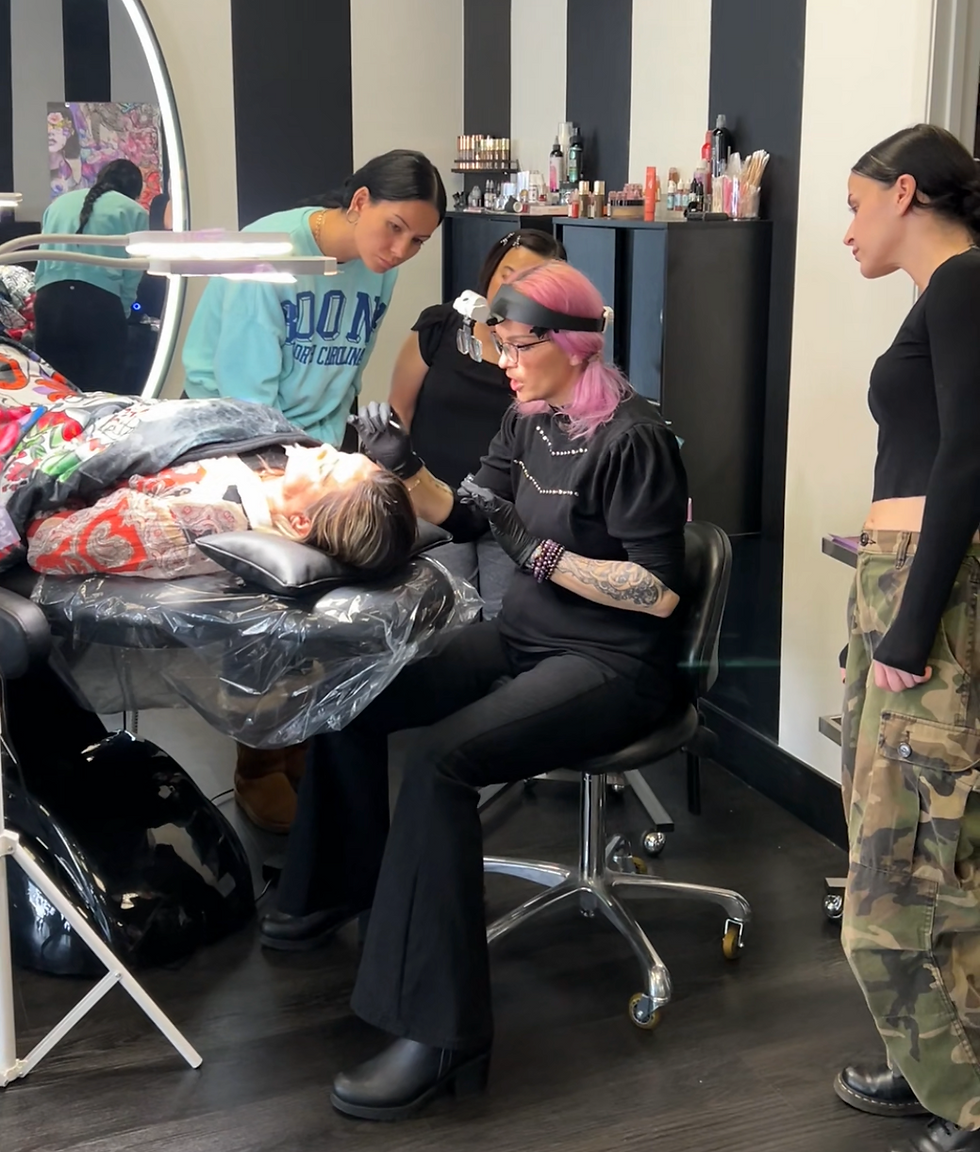
Let’s talk about the part nobody likes to admit.
The fear.
Because it’s real.
I experienced it too.
Early in my career, I would get into my head and suddenly think:
“Oh my gosh… I’m actually tattooing someone’s face.”
And honestly, it would freak me out.
When you’re performing permanent makeup, you’re not drawing on paper.
You’re not working on a practice skin.
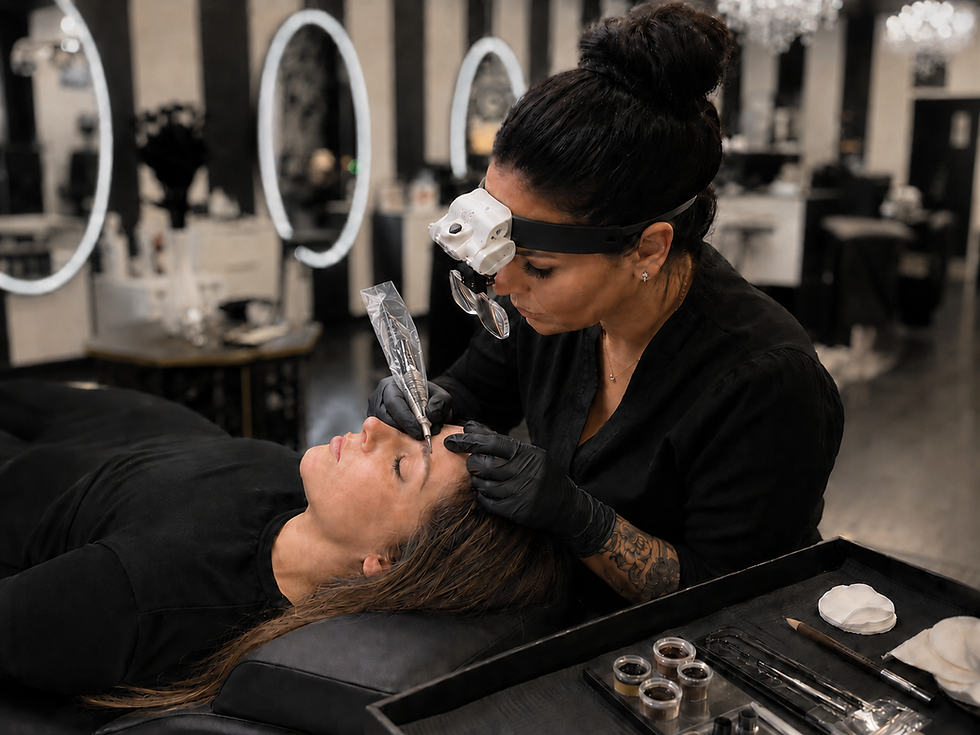
You’re implanting pigment into a real person’s skin.
That realization can feel overwhelming when you’re first starting out.
And if you’ve ever felt that way, you’re not alone.
Most artists do.
You Have To Take The Plunge

At some point, you have to jump.
There is no perfect moment.
There is no magical number of practice skins that suddenly removes all fear.
There is no secret level of readiness where confidence automatically appears.
You simply have to take the plunge.
You have to get your feet wet.
You have to immerse yourself in the experience.
Because that’s where the real growth happens.
The first model feels scary.
The second feels a little easier.
The third feels better.
The tenth feels significantly different than the first.
Confidence is earned through experience.
Not avoidance.
What Fake Skin Doesn’t Teach You
Practice skin is wonderful.
But there are certain things it simply cannot teach.
Practice skin doesn’t talk back.
Practice skin doesn’t get nervous.
Practice skin doesn’t ask questions.
Practice skin doesn’t have oily skin.
Practice skin doesn’t have mature skin.
Practice skin doesn’t have asymmetry.
Practice skin doesn’t move.
Practice skin doesn’t show up late.
Practice skin doesn’t require consultation skills.
Practice skin doesn’t teach client communication.
Those lessons happen when you start working with real people.
And those lessons are just as important as the technical skills.
Confidence Comes From Repetition
One of the biggest misconceptions in permanent makeup is that confidence comes before action.
It doesn’t.
Confidence comes after action.
You don’t become confident and then start taking clients.
You start taking clients and eventually become confident.
That’s exactly how it worked for me.
Every procedure helped build confidence.
Every challenge taught me something.
Every client helped me grow.
The more experience I gained, the quieter the fear became.

Why Mentorship Matters
This is exactly why mentorship is so important.
Many students aren’t struggling with technique.
They’re struggling with fear.
They’re struggling with self-doubt.
They’re struggling with the emotional side of becoming a permanent makeup artist.
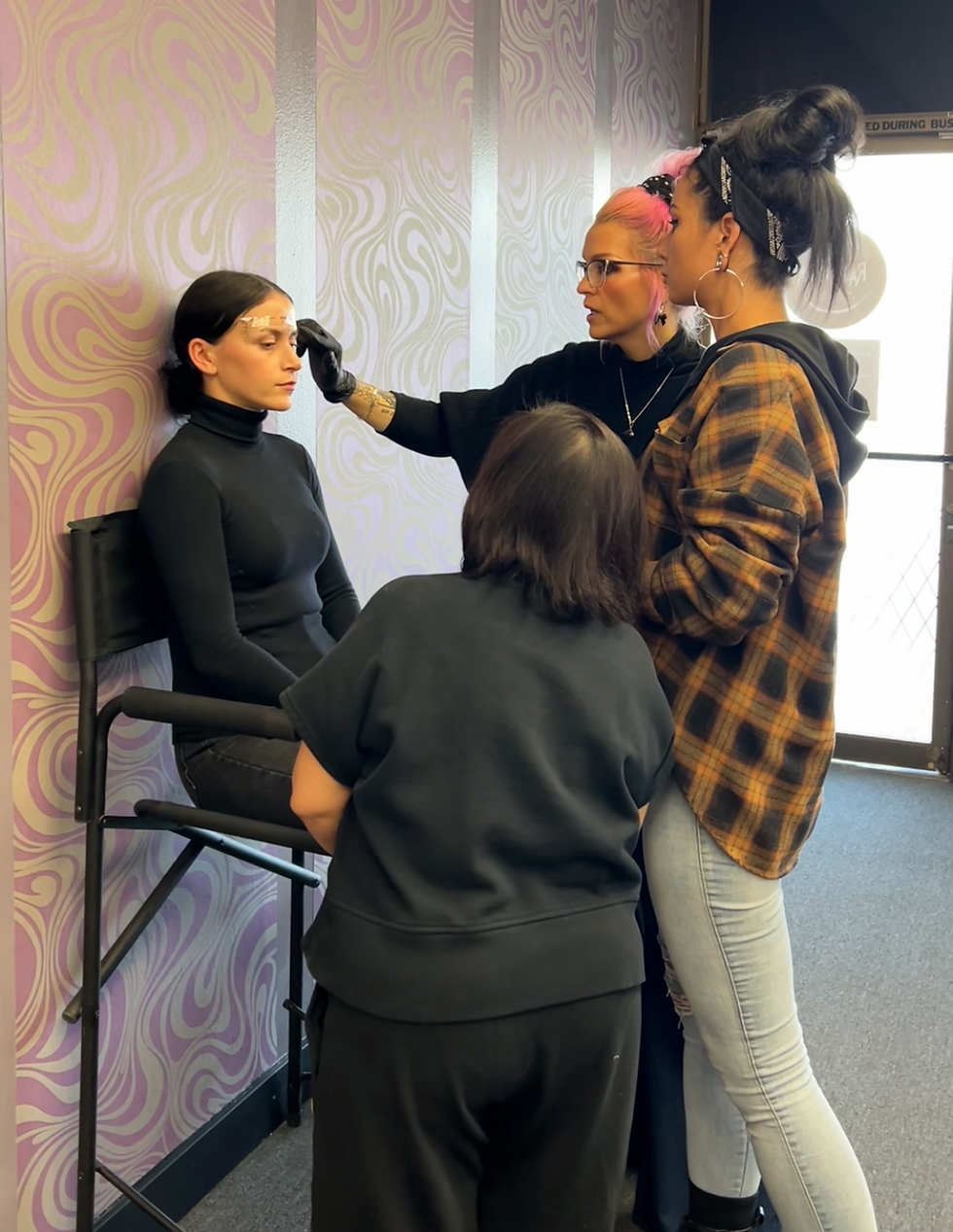
Having someone beside you saying:
“You’ve got this.”
“You’re doing fine.”
“Keep going.”
can make all the difference.
Sometimes students don’t need another practice skin.
Sometimes they need support.
Practice Will Never End
Here’s something else I want students to understand.
Practice never stops.
Even after 10 years in this industry, I’m still learning.
I’m still refining techniques.
I’m still trying new approaches.
I’m still investing in education.
Practice doesn’t end when you take your first model.
Practice doesn’t end after your first year.
Practice is part of being a professional.
The goal isn’t to stop practicing.
The goal is to stop hiding behind practice.
There’s a difference.
Final Thoughts
Practice skin is incredibly important.
Use it.
Learn from it.
Build your foundation with it.
But don’t let it become the thing that keeps you from moving forward. At some point, you have to trust your training.
Trust your preparation.
Trust yourself.
Because the confidence you’re looking for isn’t sitting on a practice skin.
It’s waiting on the other side of experience.
The artists who grow the fastest aren’t always the most talented.
They’re often the ones willing to be uncomfortable long enough to become confident.
And that journey starts the moment you decide to jump.
How much should I practice on fake skin before working on a model?
Every student is different, but the goal is to build a strong foundation and then transition to supervised model work as soon as you’re ready.
Is it normal to be nervous before working on a real client?
Absolutely. Most permanent makeup artists experience fear and self-doubt when they’re first starting out.
Does confidence come with experience?
Yes. Confidence is built through repetition, practice, and real-world experience.
Why is mentorship important in PMU?
Mentorship helps students navigate both the technical and emotional challenges of becoming a permanent makeup artist.
What PMU classes does Radiant Ink offer?
Radiant Ink offers training in Powder Brows, Nano Brows, Lip Blush, Saline Removal, Fibroblast, Tiny Tattoos, Scar Camouflage, and Inkless Stretch Mark Revision in Torrance, California.


Comments