.png)
Essential Tattoo Aftercare Tips for Vibrant and Long-Lasting Ink
Getting a tattoo is exciting, but the healing process is where your long-term results really begin. Proper tattoo aftercare helps your new ink heal cleanly, stay vibrant, and avoid unnecessary irritation, fading, scabbing, or infection.
Whether you just got a small fine line tattoo, a custom piece, or a larger design, the way you care for your skin during the first few week's matters. At Radiant Ink Studios in Torrance, we want every client to leave with beautiful work and the knowledge to protect it.
Below are essential tattoo aftercare tips to help your ink heal smoothly and look its best for years.

Follow Your Artist’s Instructions First
Every tattoo is different. Placement, size, shading, linework, skin type, and healing style can all affect aftercare.
Before anything else, follow the instructions given by your tattoo artist. If they used a bandage, second-skin film, or plastic wrap, they would let you know how long to keep it on and when to remove it.
Your artist knows how your tattoo was done, so their instructions should always be your main guide.

Wash Your Hands Before Touching Your Tattoo
Your fresh tattoo is healing skin, so cleanliness is everything. Before touching, washing, or moisturizing your tattoo, always wash your hands first.
This helps reduce the risk of bacteria getting into the area while your skin is still open and sensitive.
Clean Your Tattoo Gently
Once it is time to remove the covering, gently wash the tattoo with lukewarm water and a mild, fragrance-free soap.
Use clean fingertips only. Do not scrub the tattoo with a washcloth, loofah, or towel.
Gently remove any plasma, blood, or leftover ointment from the surface. Then rinse carefully and pat the area dry with a clean paper towel or soft clean towel. You can also let it air dry for a few minutes before applying aftercare.

Avoid hot water, heavy pressure, and harsh soaps. Your tattoo does not need aggressive cleaning. It needs gentle, consistent care.
Use a Thin Layer of A+D Ointment in the Early Healing Stage
A+D Ointment is a popular option for the early stage of tattoo healing because it acts as a skin protectant and helps create a light barrier over the skin.

The key word is thin.
You only need a very small amount. Your tattoo should not look greasy, shiny, or overly coated. Too much ointment can suffocate the skin, trap moisture, and make healing more difficult.
A good rule: apply just enough to lightly moisturize the tattoo, then gently blot away any excess.
A+D can be especially helpful during the first couple of days, depending on your artist’s instructions and your skin’s needs. After that, many people switch to a lighter fragrance-free moisturizer.
Switch to a Fragrance-Free Moisturizer Like Cetaphil
Once your tattoo starts settling into the peeling or dry stage, a fragrance-free moisturizer can help keep the skin comfortable without adding unnecessary irritation.
Cetaphil is a great option because many of its moisturizing products are made for sensitive skin and are fragrance-free. Fragrance-free matters because added fragrance can irritate fresh or healing skin.
Apply a light layer 2 to 3 times a day, or whenever the tattoo feels dry or tight.
Your goal is not to keep the tattoo wet. Your goal is to keep the skin lightly moisturized so it can heal without becoming overly dry, cracked, or irritated.
Pro Tip: You Do Not Always Need Expensive Tattoo-Branded Aftercare
Tattoo-branded aftercare products can be nice, but they are not always necessary.
Simple, gentle drugstore products like A+D Ointment and fragrance-free Cetaphil moisturizer are often much more affordable and can work beautifully for basic tattoo aftercare when used correctly.

The most important things are:
Fragrance-free
Gentle on sensitive skin
Used in thin layers
Recommended or approved by your artist
Not overloaded onto the tattoo
Aftercare does not need to be fancy. It needs to be clean, consistent, and skin-friendly.
Do Not Pick, Scratch, or Peel Your Tattoo
As your tattoo heals, it may itch, flake, peel, or form light scabbing. This is normal.
Do not pick at it.
Picking or scratching can pull out ink, cause patchy healing, increase scarring, and affect how crisp the tattoo looks once healed.

If the itching gets annoying, gently tap around the area or apply a small amount of fragrance-free moisturizer. Keep your nails short if you are worried about scratching in your sleep.
Let the flakes fall off naturally. Your tattoo is doing its tiny skin-snake shedding ritual. Let it be weird in peace.
Avoid Direct Sunlight While Healing
Fresh tattoos and sunlight are not friends.
UV exposure can irritate healing skin and contribute to fading. During the healing stage, keep your tattoo covered with loose, breathable clothing when going outside.
Do not apply sunscreen to a fresh tattoo unless your artist says it is safe to do so. Sunscreen is best used after the tattoo is fully healed.
Once healed, protect your tattoo with a broad-spectrum SPF 30 or higher whenever it will be exposed to the sun. This helps keep your ink looking brighter and sharper over time.
Avoid Swimming, Hot Tubs, Baths, and Soaking
Showers are fine, but soaking your fresh tattoo is not.
Avoid:
Swimming pools
Hot tubs
Baths
Oceans
Lakes
Saunas
Long soaking showers
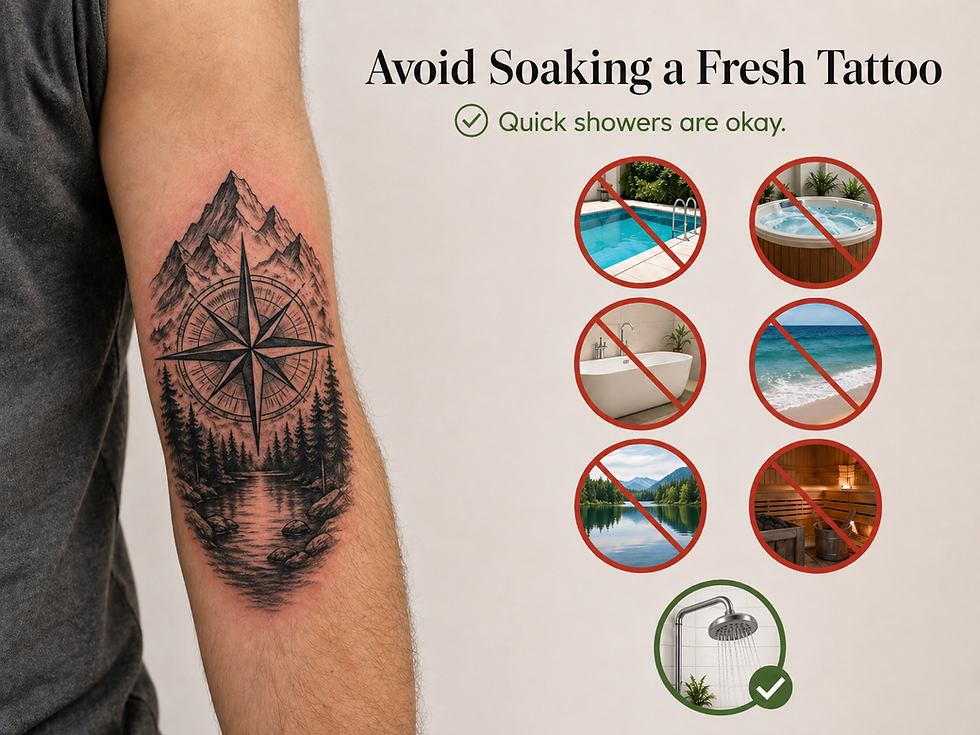
Submerging a fresh tattoo can soften scabs, irritate the skin, and increase the risk of bacteria entering the area.
For the first couple of weeks, keep showers quick and avoid letting strong water pressure hit the tattoo directly.
Wear Loose, Breathable Clothing
Tight clothing can rub against your tattoo and irritate the healing skin. This can be especially frustrating for tattoos on the ribs, waist, hips, thighs, arms, or areas where clothing naturally moves.
Choose soft, loose, breathable fabrics whenever possible.
If your tattoo is in an area that sweats easily, change clothes as needed and keep the area clean and dry. Sweat, friction, and tight fabric can slow down healing and make the tattoo more uncomfortable.
Avoid Heavy Sweating at First
Light movement is usually fine, but intense workouts can be rough on a fresh tattoo.
Heavy sweating, gym equipment, tight activewear, and repeated friction can irritate the area. If your tattoo is in a high-movement spot, give it time to calm down before jumping back into intense workouts.
If you do exercise, clean the tattoo gently afterward and avoid anything that rubs directly over it.
Watch for Signs of Infection
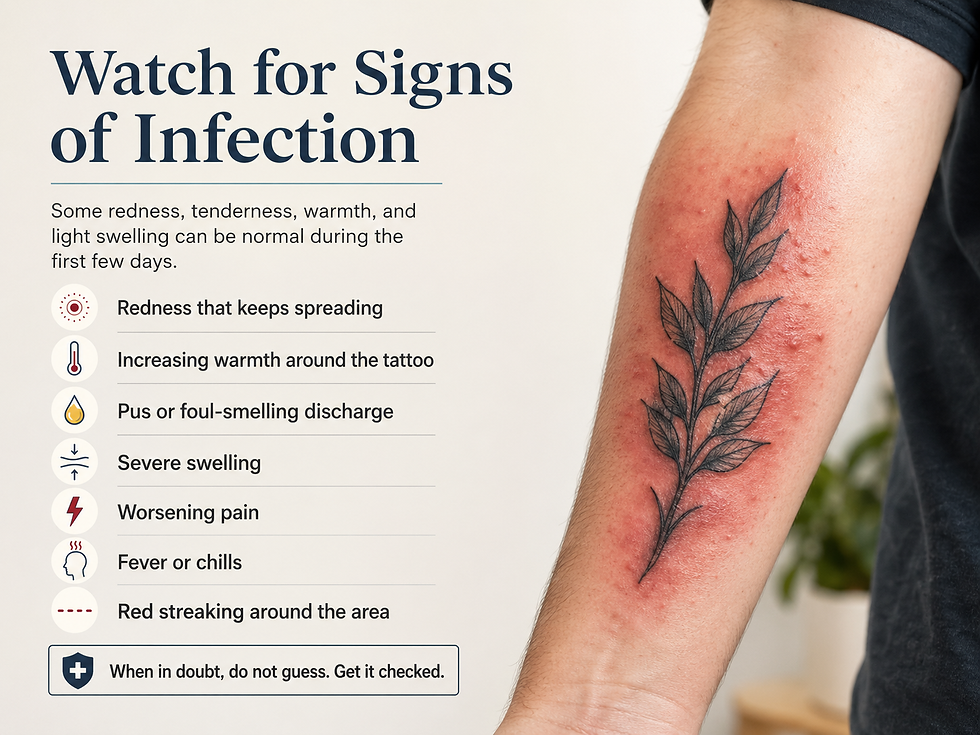
However, you should contact a healthcare professional if you notice symptoms such as:
Redness that keeps spreading
Increasing warmth around the tattoo
Pus or foul-smelling discharge
Severe swelling
Worsening pain
Fever or chills
Red streaking around the area
When in doubt, do not guess. Get it checked.
Keep Your Tattoo Hydrated Long-Term
Tattoo care does not stop once the peeling ends.
Healthy, hydrated skin helps tattoos look brighter and smoother. Dry skin can make tattoos appear dull, faded, or flaky.
After your tattoo is fully healed, continue using a gentle moisturizer as part of your regular routine. This is especially helpful in dry weather, after shaving, or after sun exposure.
Long-term tattoo care is simple: moisturize, protect from sun, and avoid letting the skin get overly dry.
Use Sunscreen After Your Tattoo Heals
Sun exposure is one of the biggest reasons tattoos fade over time.
Once your tattoo is fully healed, apply a broad-spectrum SPF 30 or higher when your tattoo will be exposed. Reapply as needed, especially if you are sweating, swimming, or outside for long periods.

Book a Touch-Up if Needed
Even with great aftercare, some tattoos may need a touch-up. This can depend on placement, skin type, ink saturation, healing, and lifestyle.
Areas that move a lot or experience more friction may fade faster. Fine line tattoos may also soften slightly over time as the skin heals and ages.
If your tattoo heals lighter than expected or loses a small detail, talk with your artist about whether a touch-up is recommended.
This is one of the easiest ways to keep your tattoo looking vibrant for years.
Final Thoughts: Good Aftercare Protects Your Investment
A tattoo is more than fresh ink. It is artwork placed into living skin.
The better you care for it, the better it can heal, settle, and last. Gentle cleansing, light moisturizing, sun protection, and patience make a major difference.
If you recently got a tattoo at Radiant Ink Studios or are planning your next piece, our team can walk you through proper aftercare based on your tattoo, placement, and skin type.
For tattoo appointments or aftercare questions, contact Radiant Ink Studios in Torrance.
Text us at 424-224-6477 to book your tattoo appointment or ask about custom tattoo services.


Comments